1. Roof Pitch
Provide the roof pitch, such as 3/12, 4/12, 6/12, or 8/12. Roof pitch affects snow movement, row spacing, and overall snow retention layout.
Snow Rail Layout Help
Send us your roof pitch, panel type, seam or rib spacing, panel seam height, panel gauge, horizontal eave length, roof run, project location, photos, and snow load rating. Our team can help review whether a SnoBar or ColorBar snow rail system is the better fit for your metal roof.
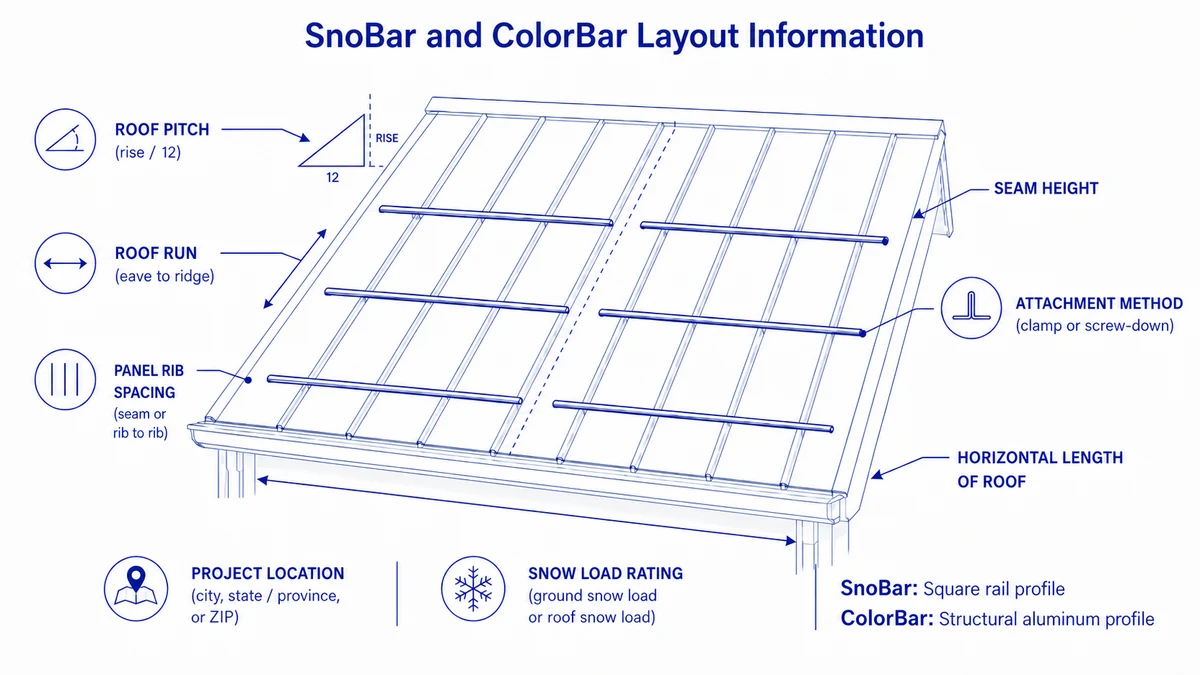
The more accurate the project information is, the more useful the snow rail layout guidance will be. Gather the following roof measurements, panel details, seam height, panel gauge, project location, photos, and snow load information before requesting a quote.
Provide the roof pitch, such as 3/12, 4/12, 6/12, or 8/12. Roof pitch affects snow movement, row spacing, and overall snow retention layout.
Identify whether the roof is standing seam, exposed-fastener, corrugated, R-panel/PBR, or another metal roof panel profile.
For standing seam roofs, provide seam spacing. For exposed-fastener roofs, provide panel rib spacing and the flat mounting area available between ribs.
Measure the horizontal length along the eave where the snow rail system will be installed. This helps estimate rail quantity and bracket placement.
Provide the distance from the eave toward the ridge. This helps determine how many rows of snow rail may be needed.
Include the city, state, province, or ZIP/postal code so snow conditions and regional exposure can be considered.
Provide the ground snow load or roof snow load rating for the building location, if available. This may be listed on building plans, engineering documents, permit paperwork, or local building code information.
For standing seam roofs, provide the panel seam height, such as 1", 1.5", 1.75", or 2", if available. Also include the metal panel gauge, such as 24 gauge, 26 gauge, or 29 gauge. Seam height and panel gauge help determine clamp compatibility and attachment requirements.
Have these details ready? Submit your measurements, roof photos, and project location for SnoBar or ColorBar layout help.
Request a Snow Rail QuotePhotos help confirm the roof panel style, attachment method, seam profile, rib spacing, and any areas that need special attention.
Include a wide photo of the roof area where snow retention is needed. Also include upper roof sections if snow could slide onto lower roofs.
Include a close-up view of the roof panel. For standing seam roofs, show the seam profile. For exposed-fastener systems, show the distance between major and minor ribs.
Include photos above walkways, doors, garage doors, lower roofs, equipment, entrances, or other areas where falling snow could create a hazard.
SnoBar and ColorBar are both bar-style snow retention systems, but the correct system depends on roof type, attachment method, appearance preference, seam height and width, panel gauge, roof structure, and snow load conditions.
SnoBar is a strong, economical, low-profile square snow rail available in mill-finish galvanized steel, stainless steel, or optional powder-coated finishes for standing seam and exposed-fastener metal roofs.
Learn About SnoBarColorBar is a structural aluminum snow rail system available for screw-down and clamp-on applications, with optional color strip or powder-coated matching for a cleaner finished appearance.
Learn About ColorBarLayout recommendations are planning guidance only. Final installation should account for roof structure, panel condition, seam profile, panel gauge, snow load, roof geometry, building use, and hazards below the roof edge.
These common questions explain why roof measurements, panel details, photos, and snow load information are important when requesting SnoBar or ColorBar layout help.
Useful quote information includes roof pitch, panel type, seam or rib spacing, horizontal eave length, roof run, project location, snow load rating, photos, and for standing seam roofs, seam height and panel gauge.
Roof pitch affects how snow moves on the roof and helps determine row spacing, system placement, and the overall snow retention layout.
Standing seam systems attach at the seams, so seam spacing helps determine clamp and bracket layout. Exposed-fastener systems mount through the panel into structure, so rib spacing and flat mounting area help determine where brackets can be placed.
Helpful photos include a wide roof overview, close-ups of the panel profile, seam or rib spacing photos, and pictures of problem areas such as walkways, doors, garage doors, lower roofs, entrances, or equipment below the roof edge.
A snow load rating is helpful and may be found on building plans, engineering documents, permit paperwork, or local building code information. If it is not available, provide the project location so regional snow conditions can be reviewed.
Send your roof measurements, panel information, seam height, panel gauge, project location, snow load rating, and photos so the correct SnoBar or ColorBar snow rail system can be reviewed.